

How Often Does a Septic Tank Need Pumping?
The honest answer: it depends on your tank size and household size, not the calendar. A 1,000 gallon tank serving a family of four in Gilbert generally needs pumping every 3 to 5 years, and that range holds whether you're near Mesa, 8.1 miles north, or out toward Queen Creek, 10.9 miles southeast. Bigger households flush more, so they push toward the shorter end. A vacation property that sits empty half the year can stretch longer between visits. If you've never had yours pumped and you're not sure when the tank was installed, that's reason enough to schedule a look. Waiting until something backs up costs more than a routine visit ever would. For a full breakdown of what shapes that interval, see how often to pump a septic tank. If you're weighing a septic system against renting equipment for a short project instead, our portable restroom rental page and septic tank pumping cost guide both help with that comparison.
What Are the Warning Signs a Septic Tank Needs Pumping?
Slow drains, gurgling pipes and standing water near the drain field are the big three. Pooling water or unusually green grass over the leach field means the tank is full and effluent has nowhere left to go. Sewage odor indoors or outdoors, especially near the tank lid or drain field, is another signal you shouldn't ignore. Backups into tubs and sinks are the last stage, and by then it's often an emergency rather than routine maintenance. Gilbert homeowners dealing with any of these should read septic tank warning signs for the full list, and if you're already seeing backup, jump straight to emergency septic service rather than waiting for a scheduled slot. A slow-draining kitchen sink paired with gurgling toilets is a classic combination that points at the tank, not a single clogged fixture. Catching it at the "slow drain" stage instead of the "sewage in the yard" stage is the difference between a routine pump-out and a repair invoice.
What Does a Septic Pumping Service Include?
A full service call means locating the tank, uncovering the lid, pumping out the solids and liquids, and checking the baffles and tank condition while the truck is on site. Most companies will also give you a rough read on remaining tank life and flag anything that looks like a crack or a failing baffle. This is different from a grease trap service: a grease interceptor gets pumped once fats, oils, grease and solids reach 25 percent of the liquid depth, which is a volume threshold rather than a time-based schedule. If you're running a restaurant or commercial kitchen in Gilbert, that's a separate maintenance track from residential septic and worth reading up on at grease trap pumping. For a septic tank specifically, the visit itself typically takes under an hour for a standard residential tank, though access issues (a buried lid, a long driveway, a tank under landscaping) can add time. See septic tank cleaning for what a deeper cleaning visit involves versus a standard pump-out.

Septic Pumping Cost by Tank Size
Pricing depends mostly on tank size, access, and whether it's a routine visit or an emergency call. Here's what a standard day-rate service call looks like:
| Service type | Price range |
|---|---|
| Standard septic pumping (day) | $150 to $300 |
| Emergency or weekend septic call | $50 to $150 |
A larger tank or one with poor access (a lid buried under pavers, a long haul from the truck) can push toward the higher end of that range. A smaller tank with an easy-access lid near the driveway will run toward the lower end. These figures are for a single pump-out visit, not a maintenance contract. For homes with fewer people or smaller tanks, septic tank pumping cost walks through more of the variables that move the number up or down. If your project needs equipment rather than septic service, our porta potty rental cost and dumpster rental cost pages cover those separately.
Do You Offer Holding Tank Service?
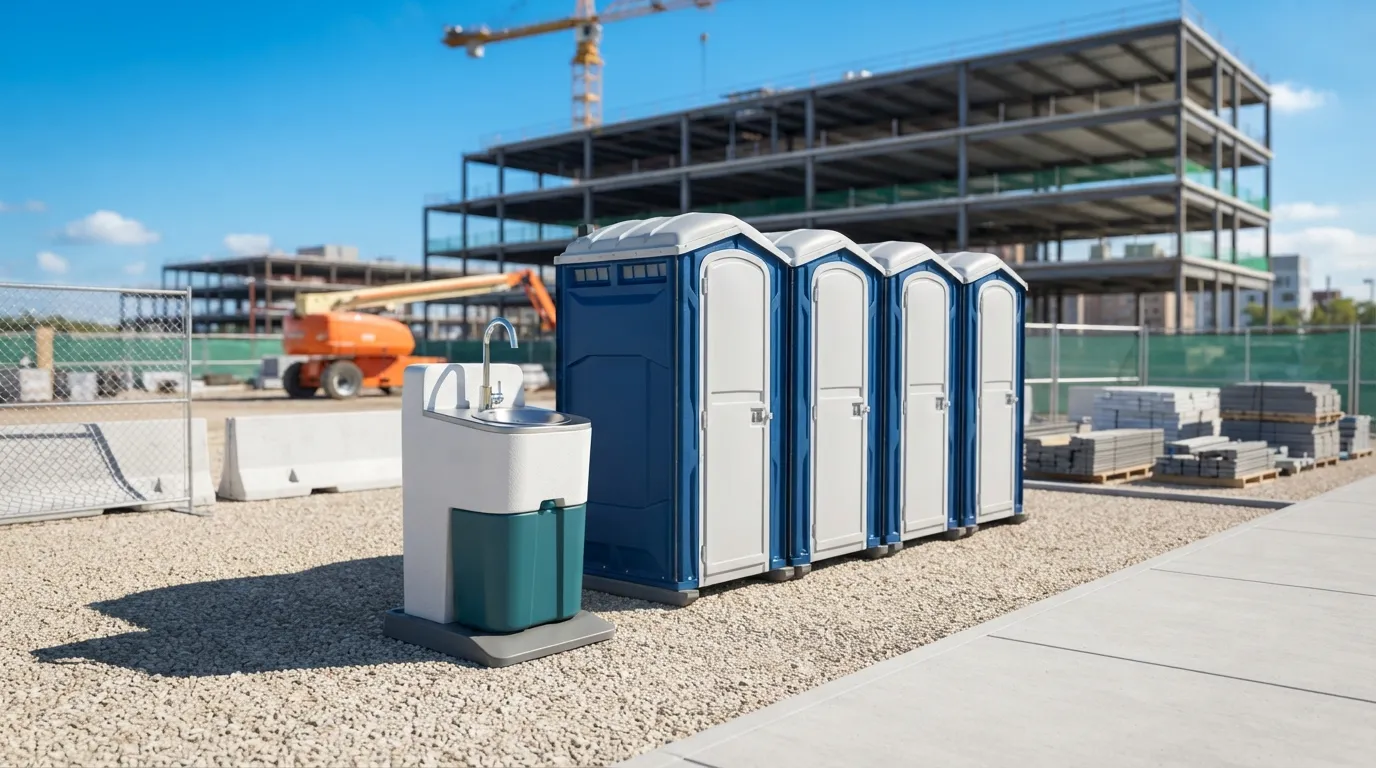
Yes. A holding tank is different from a septic system. It has no drain field and no treatment component. It just stores waste until it's pumped, so it needs servicing far more often than a septic tank, sometimes weekly depending on household size or site usage. This matters for construction sites, remote properties, or any Gilbert location where a full septic system isn't feasible. If you're setting up temporary sanitation for a job site instead of a permanent tank, holding tank rental explains how that setup works, and it pairs naturally with construction site services if you need restrooms and waste storage in the same visit. Standard portable toilets on a job site have their own tank capacity: a typical unit carries a 60 to 70 gallon holding tank, which is why crews with more than a handful of workers need multiple units serviced on a set schedule rather than one unit stretched thin. See standard porta potty rental for specs on that setup.

What Happens in a Septic Emergency?
A backup into the house, sewage surfacing in the yard, or a tank that's overflowing all count as emergencies, and they need a same-day response, not a scheduled slot next week. Emergency and weekend septic calls run $50 to $150, reflecting the faster turnaround. If you're dealing with a backup right now, don't wait on a routine appointment; call for emergency septic service directly. Gilbert Porta Pros treats these as priority calls because a failing tank gets worse by the hour, not the day. Disaster situations, flooding, or sudden household changes (a large gathering, an extended family staying over) can also overload a tank faster than expected, and disaster relief sanitation covers broader emergency setups if sanitation needs extend beyond just the tank itself. If the issue turns out to be a drain field failure rather than a full tank, that's a repair conversation, not a pumping one, but the pump-out is always the right first step to diagnose it.
Gilbert Porta Pros services septic systems throughout Gilbert and nearby communities, including Sun Lakes at 14.3 miles southwest and Apache Junction at 17.7 miles northeast. For a look at everything we run, including roll-off dumpster rental, temporary fence rental, and restroom trailer rental, start at the homepage or check service areas for the full coverage map. Questions about scheduling or pricing can go straight to request a quote or contact.
How much does septic tank pumping cost?
A standard septic pumping visit runs $150 to $300, with emergency or weekend calls at $50 to $150. The exact number depends on tank size, access, and whether it's routine or urgent. See septic tank pumping cost for a fuller breakdown by situation.
How often should a 1,000 gallon septic tank be pumped?
Every 3 to 5 years for a typical household, though larger families or heavier water use push toward the shorter end. Tank size and usage matter more than a fixed calendar date. Check how often to pump a septic tank for specifics.
What are signs my septic tank needs pumping now?
Slow drains, gurgling pipes, sewage odor, and standing water over the drain field are the main warning signs. Backups into the house mean it's already an emergency. Full details are on septic tank warning signs.
Is a holding tank the same as a septic system?
No. A holding tank stores waste with no treatment or drain field, so it needs pumping far more often, sometimes weekly. Septic tanks treat and disperse waste through a drain field over years. See holding tank rental for setup details.
Do you handle emergency septic pumping?
Yes, same-day response for backups, overflow, or sewage surfacing in the yard. Emergency and weekend calls run $50 to $150. Reach emergency septic service directly for urgent situations rather than waiting on a routine booking.
How is grease trap pumping different from septic pumping?
Grease traps get pumped based on volume, once fats, oils, grease and solids reach 25 percent of liquid depth, not on a fixed timeline like septic tanks. Restaurants and commercial kitchens need this tracked separately. See grease trap pumping for details.
Next step
Get a delivery date
Tell us the address, the dates and the headcount. We size the order and confirm the route.