How many porta potties does my construction site need?
OSHA 1926.51(c)(1) sets the baseline: one toilet facility for every 20 workers or fewer. Once you hit 20 workers, you need one toilet seat and one urinal per 40 workers. At 200 or more workers, add one more per 50. A construction crew of 30 people needs at least two standard units. Larger sites with crews over 100 benefit from ADA accessible porta potties to stay compliant. Gilbert job sites and temporary facilities often stack multiple units because workers spread across the site and walk time matters. We size the rental to your crew count and site layout, not just the rule. Standard porta potty rental covers most construction work. Request a quote with your crew size and we'll do the math.
What's the difference between standard, deluxe and ADA units?
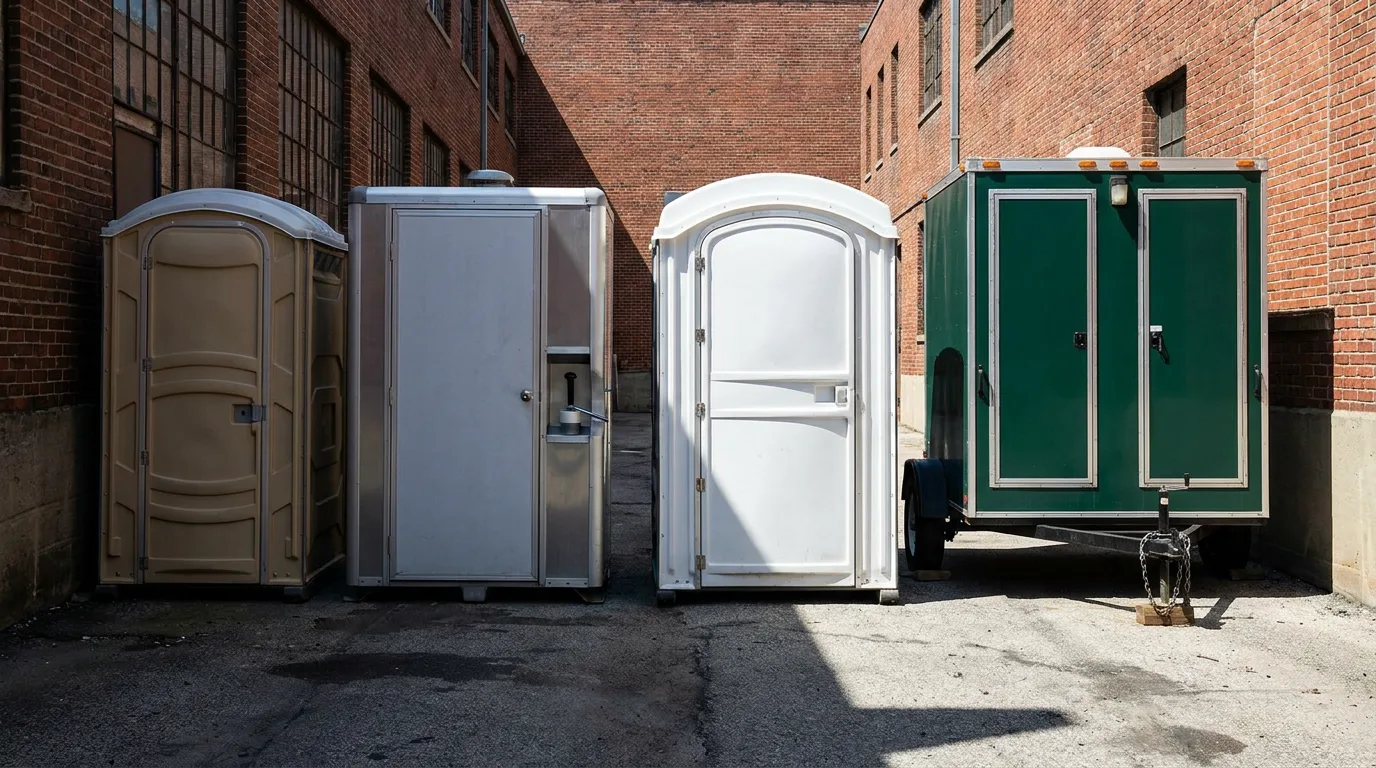
A standard unit holds 60 to 70 gallons and measures about 44 by 48 inches on the ground. It's the workhorse for construction. Deluxe flushable porta potties have a toilet that flushes, hand sanitizer and a larger interior, running higher in cost and comfort. ADA accessible porta potties meet ADA Standards section 213.2: they're wider, taller and feature grab bars, a 32 inch door opening per ADA Standards section 404.2.3, and ramp access with a slope no steeper than 1:12 per ADA Standards section 405.2. Gilbert worksites need ADA units if any worker or visitor has mobility limits. Clustered units must include at least one accessible unit, never fewer. Deluxe and ADA units rent higher than standard because they take more space and service. Pick standard for crews without accessibility needs, upgrade for mixed sites or public events.
How often do porta potties get pumped?
One service visit per week is the baseline interval under ANSI/PSAI Z4.3 for up to 10 users over a 40 hour week. Busier sites need more frequent service. A 60 to 70 gallon tank fills faster with heat, heavy use or poor ventilation. Gilbert's summer temperatures mean some sites pump twice weekly. Restroom trailers hold more capacity and run longer between pumps. Weekly service is standard in rental contracts. Tell us your crew size and we'll recommend the right interval. More frequent service costs more but prevents backup and keeps morale up.
Do I need a permit to place a porta potty in Gilbert?
Placement in the public right of way needs confirming with the city. Call the contact page with your site address and we can walk through what the city requires. Private property sites usually need no permit. We can advise once we know where it's going.
Can I use hand sanitizer instead of a handwashing station?
No. 29 CFR 1910.141(d)(2) requires washing facilities with soap and towels or a hand drying device. Hand sanitizer does not satisfy the rule. If your crew handles paints, coatings, herbicides or insecticides, OSHA 1926.51(f)(1) mandates washing facilities right there on site. Portable sink rental or handwashing stations are non-negotiable for those jobs. Standard units lack sinks, so rent a dedicated station or upgrade to a restroom trailer.
How much does a roll-off dumpster cost per day?
Roll-off dumpsters range from $51 to $112 per day depending on size. Weekly rental is more economical. See our dumpster rental cost page for a full breakdown by size and duration. Most Gilbert jobs run a week or longer, which drops the daily rate.
How often should I pump my residential septic tank?
Pump every 3 to 5 years, driven by tank size and household size. A smaller tank with four people needs more frequent pumping than a larger tank with two. Septic tank pumping before the tank reaches capacity prevents costly backups and drain field damage. Contact us for septic tank warning signs and a service schedule tailored to your home.
Next step
Get a delivery date
Tell us the address, the dates and the headcount. We size the order and confirm the route.